
The Campaign to Build Denton County's Family Justice Center
One path. One place.
One destination:
Hope
Survivors already face an extraordinarily difficult journey.
Our job is not to ask them to navigate it better…
Our job is to build a better path.
Join Expedition Hope by helping us build that path.

Construction is Underway on Building 1, the Foundation
Nearly $12 million has been secured. Now we’re asking our community to help us complete Phase 1 and continue building the full seven-building vision.
Secured To Date
Why Expedition Hope
Expedition Hope: Building a Family Justice Center That Centralizes Services and Makes Each Survivor's Journey Easier
Right now, survivors of domestic violence are forced to navigate numerous systems that rarely talk to each other.
They retell their stories over and over, and at countless points along their trek, they run across barriers that can feel insurmountable.
They’re bravely forging their own paths as best they can, but they shouldn’t have to forge anything at all:
The path should already be laid for them.
That’s what Expedition Hope is all about: Blazing the trail where none exists so that survivors have a clear, broad highway to walk, with Denton County Friends of the Family by their side.
The DCFOF Family Justice Center will be a comprehensive, survivor-centered campus bringing safety, housing, advocacy, healing, economic empowerment, and community partners together in one place.
The goal is to fill the cracks survivors so often fall through, smoothing the path they have to walk, empowering them to remake their lives on their own terms.
Why Expedition Hope
The Vision: Seven Buildings.
One Integrated Family Justice Center
Expedition Hope is already becoming a reality. With significant funding secured and the first phases moving forward, we have tremendous momentum, but we still need your help.
Our first priority is raising the remaining funds for Phase 1. From there, Expedition Hope will continue building support for the additional buildings that will complete the Family Justice Center.
We are building a seven-building campus designed around the needs of survivors and their families. Each building serves a distinct purpose, removing barriers and creating greater access to safety, stability, healing, and independence.
Together, they create something much more powerful: one coordinated place where services, resources, and community partners come together, making it easier for survivors to access the support they choose and move forward on their own path.
Here’s what each building does (and why they’re so crucial to a survivor’s journey).
Emergency Housing, Kitchen, & Dining
- Crisis Line (24/7 access to support)
- Emergency Housing for survivors in immediate danger
- Safety Planning & Violence Reduction
- Mental Health Support
- Homelessness Prevention & Intervention
Rayzor Empowerment Center
- Workforce Development, Job Placement & Upskilling
- Training Room
- Technology Lab
- Media Room
- Creator Studio
- Sally Beauty Salon (hands-on training)
Nutrition & Daily Living
- Commercial Kitchen providing three healthy meals daily
- Demonstration Kitchen for life-skills and nutrition training
01Construction Underway
Building 1: The Foundation
Emergency Housing, Kitchen, & Dining
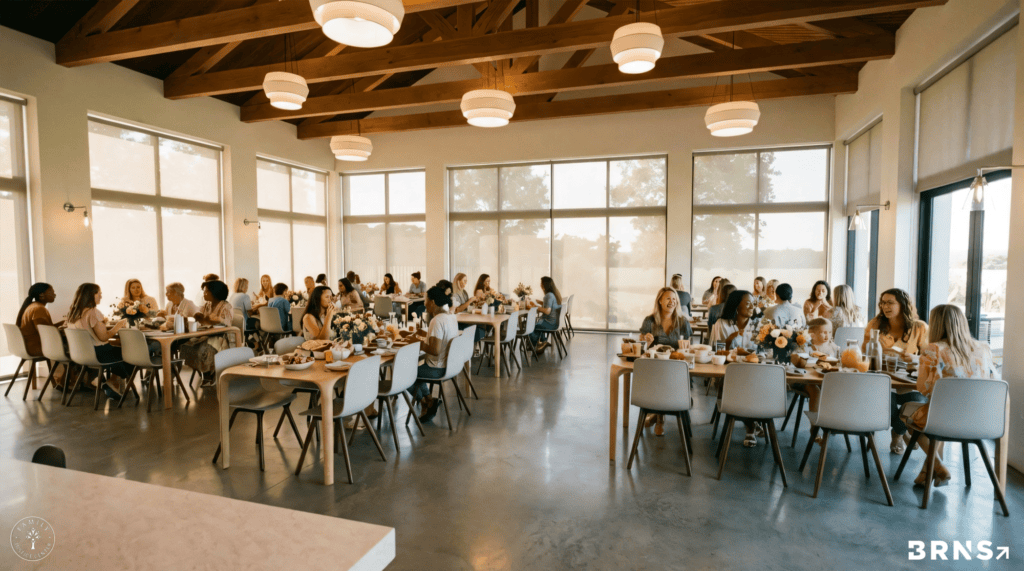
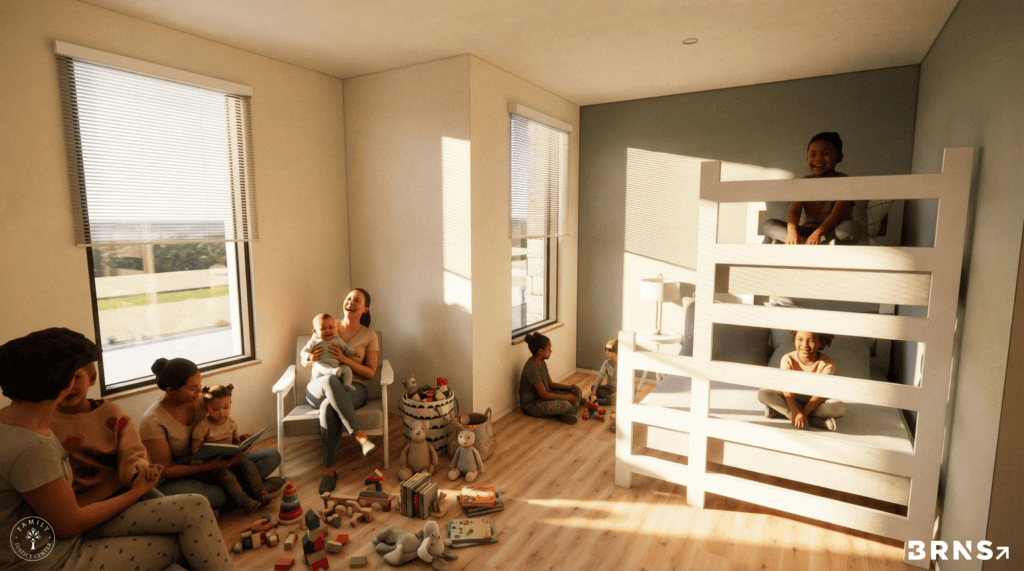
They’ll have access to:
- Private Non-Congregate Shelter Residences
- Housing Stability & Support
- Employment Services & Income Stabilization
- Connections to Long-Term Housing Resources
02Funded
Building 2: Non-Congregate Shelter
Creating Stability on the Path to Independence
Leaving abuse doesn’t automatically create stability.
Survivors may face financial abuse, disrupted employment, limited access to resources, and a shortage of affordable housing, all while working to rebuild their lives.
Survivors will have a private, safe, and stable place to stay during this critical period.
More than a place to live, it creates the time and stability needed to strengthen income, pursue employment, connect with supportive services, and prepare for the next step toward long-term housing and independence.
Located within the Family Justice Center campus, survivors will remain connected to the services and support they need as they move forward on their own path.
03Still needs funding
Building 3: Child Development Center
A Place for Every Child on the Path to Healing
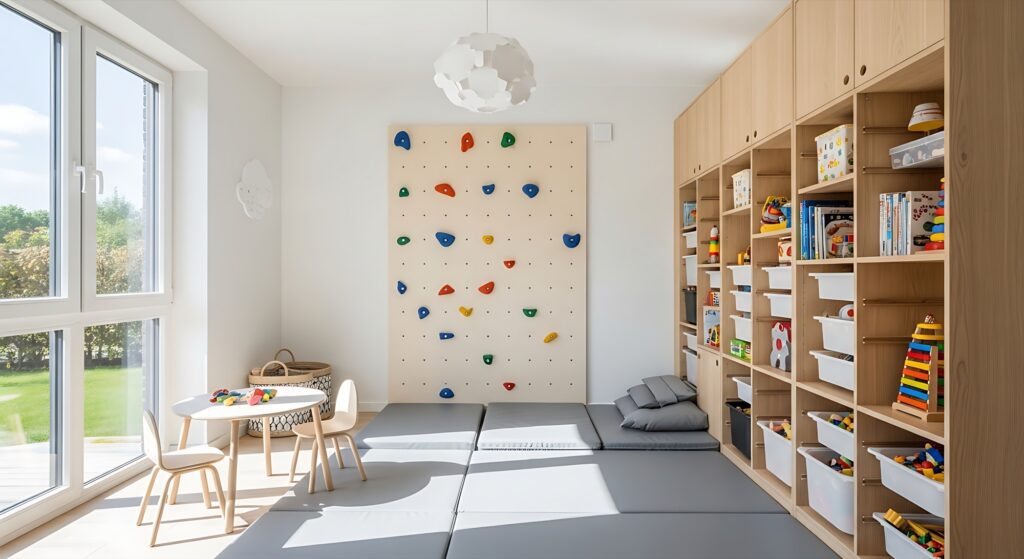
The Child Development Center removes one of the biggest barriers keeping survivors from reaching safety: dependable, trauma-informed childcare.
When children are safe and supported, parents have the time and stability to work, attend appointments, participate in services, and rebuild.
This allows them to forge their own path to safety and independence, knowing their children are not just cared for, but actively healing and progressing on their own journey to hope.
- Affordable Child Care & Early Childhood Education
- Trauma-Informed Care (ACE Intervention)
- Extended-Hour Care (supporting nontraditional work schedules)


04Still needs funding
Building 4: On-Site Pet Shelter
Ensuring She Never Has to Make the Heartbreaking Choice Between Her Safety and Her Pets
Pets can become another tool of coercion and control, leaving survivors afraid to seek safety if it means leaving a beloved animal behind.
The Purple Paws Pet Center eliminates that issue, allowing survivors to bring their pets to a safe, secure facility where they can visit them regularly while they work on achieving independence.
Studies from the American Psychiatric Association show that people who abuse animals are five times more likely to commit violent crimes against humans. The National Link Coalition found that in homes where domestic violence occurs, animals are abused in 71% of cases.
Stay up to date on all the latest updates from Expedition Hope: Join our email list today.
05Still needs funding
Building 5: Primary Services Center
Medical, Mental Health, and Legal Services, All in One Place
Everyone knows how hard it can be to schedule and keep healthcare appointments in the best of times.
For victims, it can be a near-impossible ask.
They’re overburdened with childcare, the need to work long hours to achieve financial independence…
On top of taking care of their own medical and mental health needs, which often fall by the wayside, especially when they have a legal case they have to tend to.
The Primary Services Center places all these services on-site, ensuring she doesn’t have to drive halfway across DFW for just a single appointment.
By bringing medical care, counseling, advocacy, legal services, and other critical supports together, the Primary Services Center reduces transportation barriers, missed appointments, and the burden of navigating multiple systems.
The center also includes trauma-informed crisis medical care, generously funded by Dr. Shelia Haley, as well as non-acute care that can help reduce unnecessary ER visits.
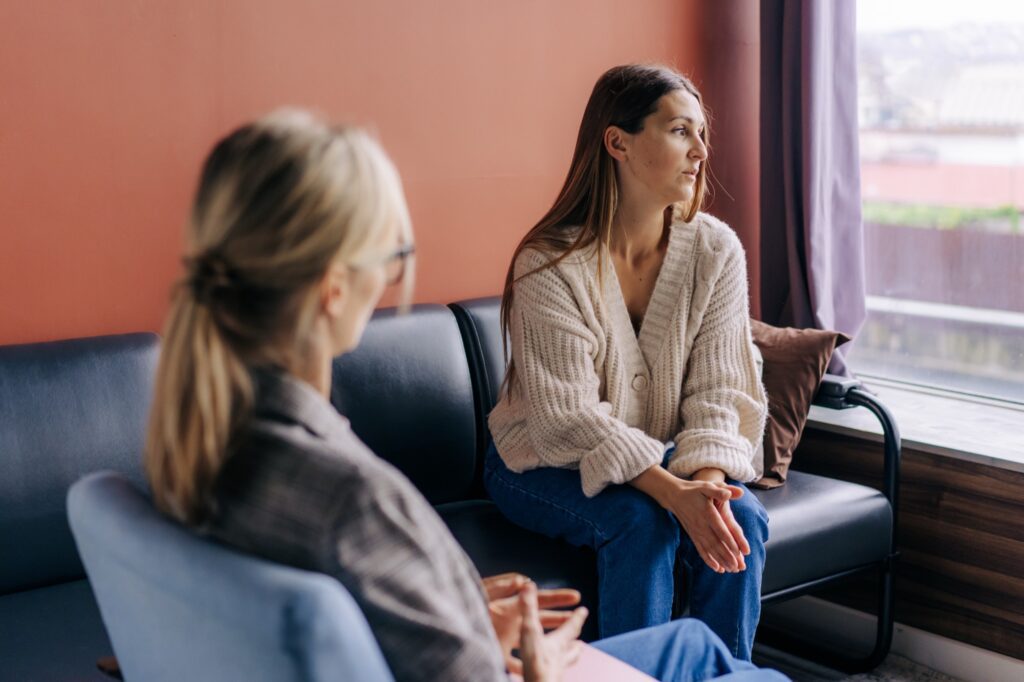
Survivors also have access to:
- Food Security Support
- Trauma-Informed Services
- Mental Health Counseling
- Legal Services
Donate now to help.
- Co-located Law Enforcement & District Attorney’s Office
- Partner Supportive Services: Employment, Food, Transportation, Education
- Supervised Visitation Center
06Still needs funding
Building 6: Partner Services Center
Bringing Law Enforcement and the DA On-Site
The Partner Services Center brings key justice and community partners together so survivors can access coordinated support without traveling from agency to agency or repeatedly navigating unfamiliar systems.
An on-site supervised visitation center will also provide a safe, structured environment when court-ordered visitation is required, helping reduce additional travel, time away from work, and stress for survivors and their children.
07Still needs funding
Building 7: Community Center
A Space for Connection and Healing
Nothing is quite as isolating as domestic violence. Victims are systematically cut off from their friends and family by the abuser, ties they may struggle to recreate once they reach safety.
Healing is about more than reaching safety: it’s also about rebuilding connection, belonging, and community.
The Community Center will create a welcoming space for survivors and families to connect, learn, participate in activities, build relationships, and remain engaged with a supportive community.
It represents belonging, connection, recreation, learning, peer support, and continued engagement.
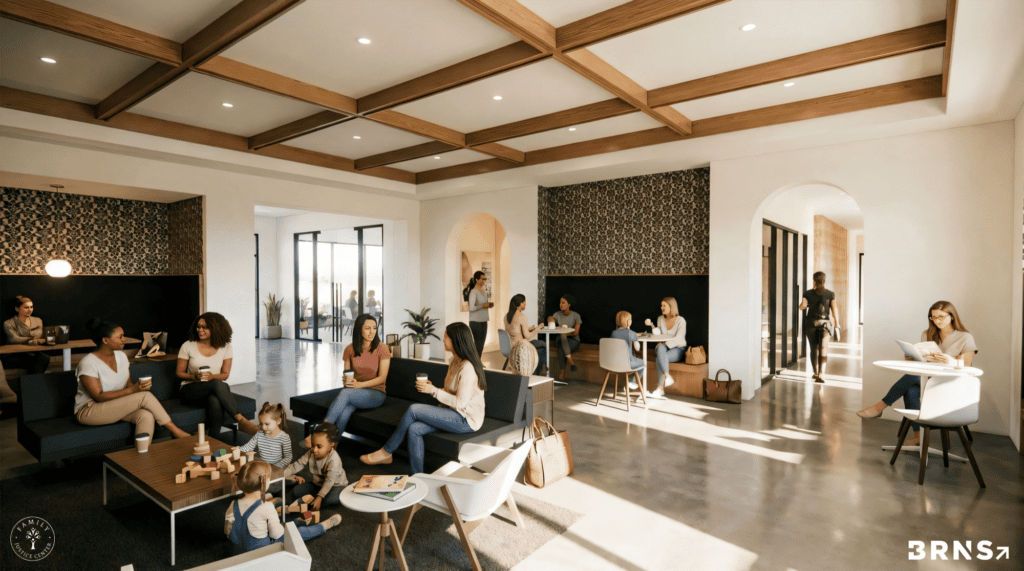

Safety may begin the journey, but community helps sustain it. We hope you can help us turn this vision into reality.
Donate now to help.